Showing posts with label game. Show all posts

Monday, June 11, 2007

From pre to neo ludology

The first major work on gaming in the western world was written in Spain at 1283, by king Alfonso the 10th, AKA Alfonso the wise. the book was a complete game guide, with rules for games like Chess, Backgammon, dice and cards. It was dictated by Alfonso to three monks and he truly felt that it is god's will for people to play. I couldn't agree more.

"...those who like to enjoy themselves in private to avoid the annoyance and unpleasantness of public places, or those who have fallen into another's power, either in prison, or slavery, or as seafarers, and in general all those who are looking for a pleasant pastime which will bring them comfort and dispel their boredom. For that reason, I, Don Alphonso... have commanded this book to be written."
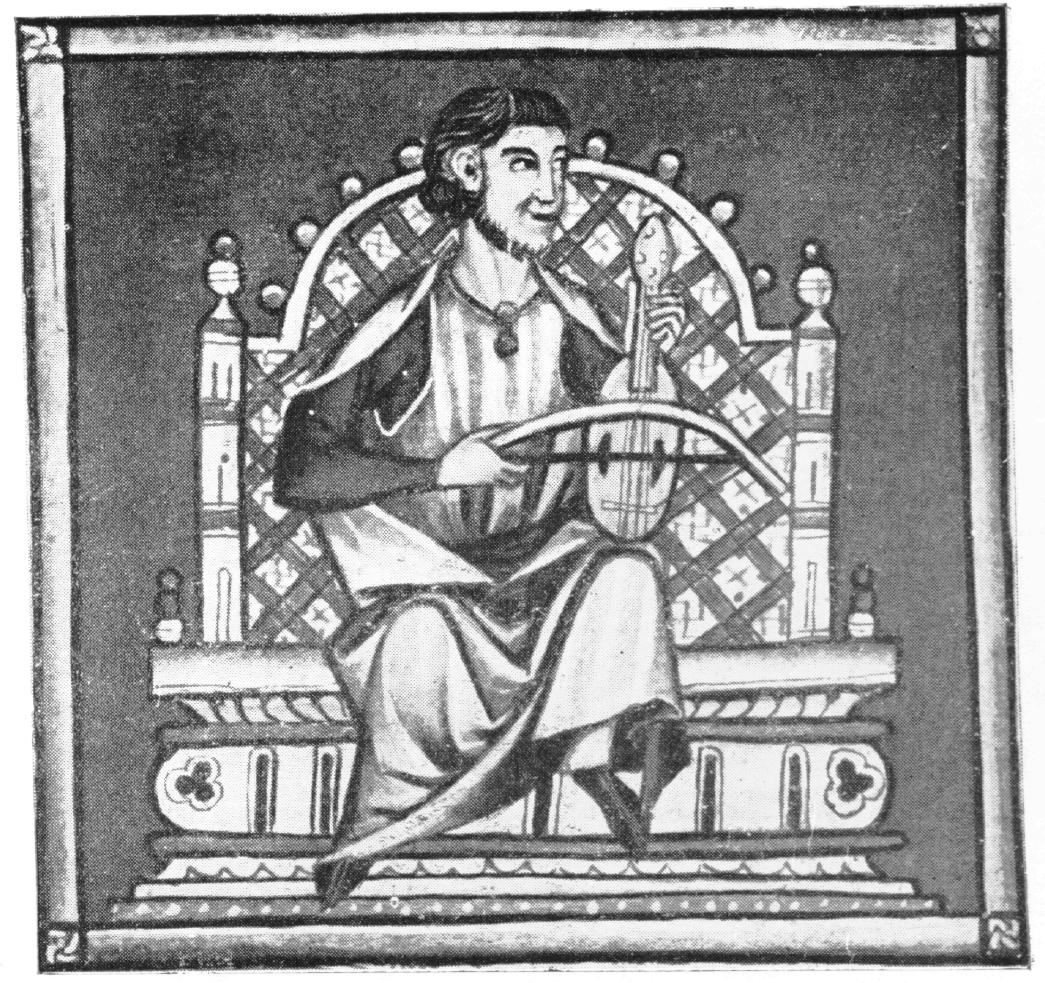
Alfonso X. It was certainly wise of him to bring his own Wiimote and nunchuk.

I Love this introduction. games help you deal or avoid with the unpleasantness of public. next time when i think of grabbing a beer at my local, I will re-think it through and turn on my box360 or my PS2. though probably when he wrote the book he didn't saw through the relation ship problem that might arose, or to be more specific the game-envy that your significant other might develop.

this help us to draw a line that starts with the pre-ludo which is mainly about the game as set of rules and/or as a part-time activity. the modern ludology which started with Huizinga's "Homo ludens" or Caillois's " Les Jeux et les Hommes" or even with fresca's "ludo vs. narratology" that address games as an important cultural texts. and the Neo -Ludology (which I will dedicate my life to develop) that will see the games , as life, as a whole, which through understanding games we can analyze and critic the whole cultural structure. neoludo will see every phenomena or situation as a ludic one, one that consists of conditions of possibility which by the way the character ( the person) or the game (society) symbolizes will lead to an outcome that can be important or not by the same standards (person or society or both symbolization).


Homo Ludens. Yes... it is practically our ludic bible.


of course what I offer here is an insufficient outline partly because I myself cant see the full picture (yet.. I hope). but from very close reading of the current ludic work, It is easy to see that there is a lot of work need to be done. and the episteme or the cultural ground that is based on is mainly modern/structural episteme (and even more common is to use a hip post thinker and subordinate him to his terms and/or to a structural theory). neo-ludo should give the respect to video games as a a new form that couldn't be described or analyzed by the old categories. it is no longer sufficient to speak about the Author but the experience. the spotlight shouldn't be on the character but about the person in the dark, the gamer and his real and virtual spatial experience.

Tuesday, May 15, 2007

Few notes on Harris's filmic game theory

I was doing my daily visit at Gamasutra.com and I stumbled upon Dow Harris's work Up From the Feuilleton: Theory of the Filmic Game. I wouldn't say that this paper changed my life, but it is interesting for most parts. Dow Harris recognize that one of the problems in the western culture is that we are too materialists. that is wrong observation in my opinion. we are not a materialist society, at least not according to Marx's sense of materialism. we do give meaning to our action and not judge our action by is definite value. I think i don't need an example, just to say that we reason or rationalize everything we do, that's the exact opposite of true materialism. we, and by that i mean western society, don't want to learn from the east. the all capitalist machine want to subdued the east and swallow it whole to be a part, a member, of the giant octopus. to say than that " we incline for action not reflection" is merely true. our entire phallocentric philosophy is all about the observing, its all about the eye, the gaze. Something exist only if we can see it.


East. No, thank you.

To be honest I didn't really understood what Harris have been trying to say. I think the model he offers for filmic games is something that already been around. not completely but games like MAX PAYNE or even the not so clever, though great fun, TRUE CRIME. the difference between cut scenes and the filmic experience, as I understand it, is merely a semantic one. in my vision I would imagine a series, lets take THE GODFATHER game for instance, that will give you the movie between the game or vise versa. if you haven't play the game, your character is a family member that didn't exist in the film but as the game goes along you discover that he is the one that did all the dirty jobs for the family, for example he is the one that puts the horses head in the director's bed. but my idea is for something completely original. imagine a police series like CSI or LAW AND ORDER that you play a criminal, you have the crimes you have to commit and than you watch , lets say, for every hour of gamer pure Violante fun you'll get a 30 min. episode resolving the crime, analyzing your disturbed personality. that will get you closer to your character, which in every media is the key element for fun, success and depth.


The Godfather - The Game. Might be a door to Filmic Gaming.

At some point of his article Harris quotes Ebert saying:
"Video games by their nature require player choices, which is the opposite of the strategy of serious film and literature, which requires authorial control. I am prepared to believe that video games can be elegant, subtle, sophisticated, challenging and visually wonderful. But I believe the nature of the medium prevents it from moving beyond craftsmanship to the stature of art. To my knowledge, no one in or out of the field has ever been able to cite a game worthy of comparison with the great dramatists, poets, filmmakers, novelists, and composers".

This is such a stupid remark by the famous film critic. first of all games don't really requires a gamer choice. that is the whole story of gaming, the game make you fell like it is your choice but it is not. gaming experience is what Jacque Lacan would have called an Extimate experience. it is an external experience disguised as an intimate and personal one. and that is, in my opinion, the definition of art. I'm not really a big fan of the whole genius/modern politics, I don't think there is such thing. I believe in timing, hypes, momentum, but even though, I think it will be fairly easy to name a lot of games that can stand tall in a list with all other geniuses if we follow the imaginary standards Ebert's ( and his kind) applies.

Kratos. God of war III will take place at Ebert's house.

I love the quote from Baudrillard. there is no truth - that's why the simulacrum is the most ethical choice, cause it doesn't hold no a-historical, metaphysical truth. it reminds me of ZIZEK observation about masturbation as the most ethical form of love making. there is no common belief it has to sustain by sustaining a whole set of empty signifiers.